What is a CULTURE?
And how do CULTURES relate to LANGUAGES?
In recent years, two strands of academic research and training practice have developed largely in parallel:
Psychology-based CONCEPTS of cultural dimensions (Hofstede; Trompenaars/Hampden-Turner; Thomas, Globe; Schwartz etc.) and
(CLICK on the picture.) | 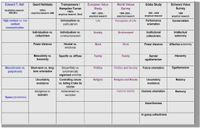 | |
discourse-based PRAGMATICS of intercultural interaction (Kramsch; Byram; Kiesling; Scollon; Sharifian; House, Kádár, Spencer-Oatey etc.). | 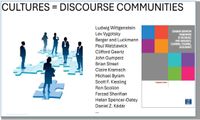 | |
"At present, there is little mutual awareness of each other's research. This is unfortunate, as there are clear synergies between the two, suggesting that each could benefit considerably from the insights of the other." Helen Spencer-Oatey (2010). Intercultural competence and pragmatics research: Examining the interface through studies of intercultural business discourse. In: Trosborg, A. (2010) Pragmatics across Languages and Cultures. p. 211 "There is a widening gap between research and [educational] practice." Christine S. Sing (2017). English as a lingua franca in international business contexts: Pedagogical implications for the teaching of English for Specific Purposes. In: Mautner, G. / Rainer, F. (eds.) 2017). Handbook of Business Communication. Linguistic Approaches. p. 347 | ||
To watch a SIETAR webinar on THE MISSING LINK: THE CULTURE-LANGUAGE CONNECTION CLICK on the image. |  |